Become a Instructor

Blogs

logotype
Menu
  • Courses
    • Salesforce Admin
    • Salesforce Developer
    • Salesforce BA Training
    • Advance Java Training
    • Buisness Analyst
    • Digital Marketing
    • Oracle DBA
    • QA Testing Course
    • SQL server Training
  • Register

+1-571 989 9489

logotype
  • Courses
    • Salesforce Admin
    • Salesforce Developer
    • Advance Java Training
    • Buisness Analyst
    • Digital Marketing
    • Oracle DBA
    • QA Testing Course
    • SQL server Training
  • Register
  • +1-571 989 9489

Become a Instructor

Blogs

logotype
Menu
  • Courses
    • Salesforce Admin
    • Salesforce Developer
    • Salesforce BA Training
    • Advance Java Training
    • Buisness Analyst
    • Digital Marketing
    • Oracle DBA
    • QA Testing Course
    • SQL server Training
  • Register

+1-571 989 9489

  • Courses
    • Salesforce Admin
    • Salesforce Developer
    • Advance Java Training
    • Buisness Analyst
    • Digital Marketing
    • Oracle DBA
    • QA Testing Course
    • SQL server Training
  • Register
  • +1-571 989 9489
logotype
logotype
  • Courses
    • Salesforce Admin
    • Salesforce Developer
    • Advance Java Training
    • Buisness Analyst
    • Digital Marketing
    • Oracle DBA
    • QA Testing Course
    • SQL server Training
  • Register
  • +1-571 989 9489
salesforce business analyst Tag
Home Posts Tagged "salesforce business analyst"

Tag: salesforce business analyst

TECHadmin0 Comments
Share article:TwitterFacebookLinkedin
11 Views
0 Likes

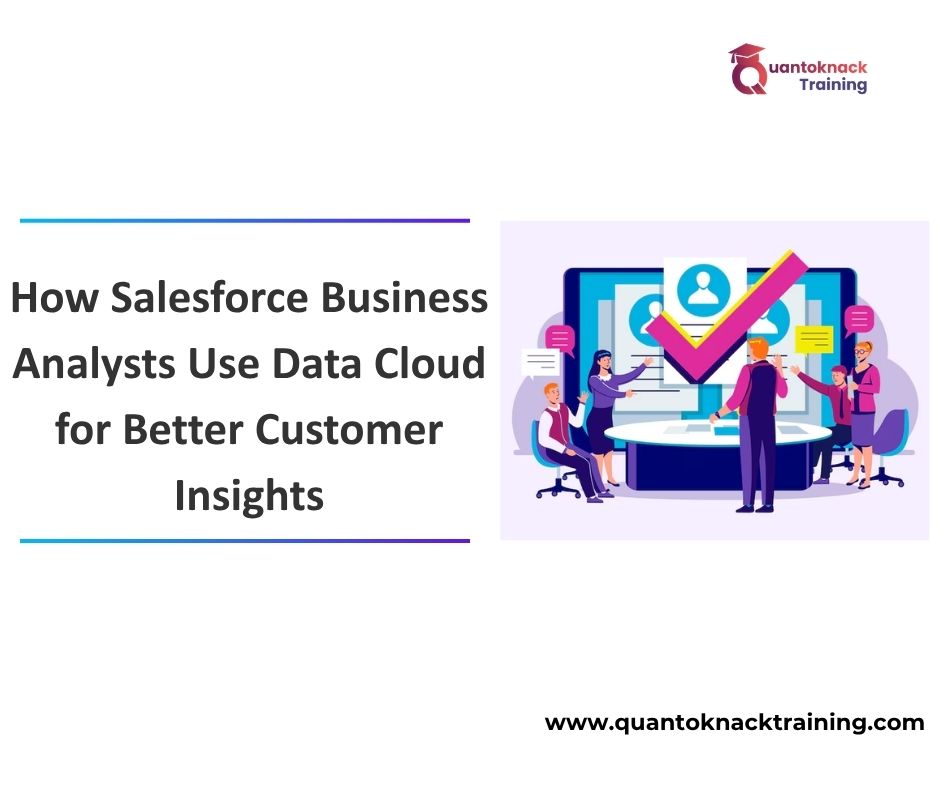
Salesforce Business Analysts and Agentforce Skills for the AI-Driven CRM Era

Do you know that a CRM can do much more than just act like a database of customer information? A CRM that reads inquiries, suggests the next step and enables your teams to work more efficiently to solve customer issues. That’s what artificial intelligence (AI) can do for you with Salesforce.
Yet, using AI is not merely a matter of new technology. Companies require people who can work to understand which problems to address, interpret what customers want, and translate the technical landscape into everyday commercial reality.
So, how do Business Analyst and AI skills intersect? As Salesforce Business Analysts and Agentforce skills become more and more important in the AI-driven CRM era, you are expected to have an analytical mindset, CRM knowledge and AI awareness.
How will all this work? Let’s check out a detailed answer below.

What Does a Salesforce Business Analyst Do in the AI Era?

A Salesforce business analyst acts as the link between the business and developers. It is the responsibility of the business analyst to understand the problems an organisation faces, document the requirements and deliver the best Salesforce solutions.
In the past, this has meant documenting workflows, writing user stories and supporting testing. Now, the analyst also has to consider how AI can make these processes more efficient and what value it might add. A sales team might spend hours to review customer records before they reach out to prospects. A business analyst can identify areas for automating these processes so that salespeople can work more efficiently.salesforce business certified analyst learners can expand their knowledge of business analysis concepts and approach CRM projects in an organized way.

How Is Agentforce Changing the Way Businesses Use CRM?

The company has announced the launch of Agentforce, which helps in the development and deployment of AI agents by tapping the flow of information between the user and the applications. The AI agents can understand queries, fetch information, and execute defined tasks within scope.
You might think what about the customer service team? Imagine a customer service team receiving hundreds of enquiries a day. An AI agent could handle the day to day questions, know customer details and assist the customer service reps with suggestions. Complex cases can be escalated to human workers.
For business, this means opportunities to get smarter on response times, drive efficiencies and deliver more consistent customer experiences. The key is getting good quality data in the right place, configured correctly and maintained effectively.
Business analysts will help determine the desired outcome, identify the use cases of the AI agent, and determine when the AI agent needs human interaction.

Which Skills Do Salesforce Business Analysts Need Today?

Technology and people skills are musts for the modern Salesforce business analyst.

  • Gather requirements: Analysts need to be able to interpret stakeholder needs and be able to produce well-formed, precise requirements.
  • Data management: Any AI system is based on data. The data must be of high quality and relevant. Skills in data quality, relationship mapping, and permissions can help AI developers avoid issues in implementation.
  • Process mapping: The documentation of existing processes helps analysts to see where they can gain efficiencies and where automation can have a significant impact.
  • Communication: Business analysts should convey technical language to a business audience and vice versa. They should also make sure that the technical and business sides have the same expectations.
  • Testing and evaluation: AI may provide different results based on contexts, so here it should be the responsibility of analysts to help create test cases in order to evaluate accuracy, reliability, and business impact.

These skills enable professionals to add value to CRM initiatives that are more than transactional.

How Can Professionals Develop Practical Agentforce Skills?

  • It’s helpful to learn the terms and to get a basic sense of the terminology behind AI. But just as important is the hands-on knowledge of how the AI agents are trained, where they get their business data from, and what they can do within workflows.
  • Test anything you are learning about Salesforce Agentforce with business use cases. For example, develop a very basic customer service use case in which a generic response can be generated by an agent based on a request, data retrieval, and following instructions.
  • Don’t forget that the limits of AI agents might misinterpret vague instructions or sometimes provide false responses when they don’t have all the data. We can reduce these issues with explicit instructions, appropriate privileges and applying testing and human supervision.
  • While business analysts may not be required to have any code skills in AI projects, knowledge of integrations, structure of data and automation logic may help working alongside Salesforce admins and developers.

How Can Business Analysis Improve AI Implementation?

AI can be a game-changer when it helps to solve real-world business problems. Imagine a business is thinking of automating its customer follow-up process. Before rolling out the process, the team must decide which customers are eligible and what information will shape every interaction and when an employee will review an action.
A business analyst will assist in answering these questions before the technical team begins configuring the solution. Salesforce Agentforce can be well understood by experts, and they can help in defining use cases, mapping processes, and also in assessing if AI-supported workflows achieve intended outcomes.
Integrating these skills with CRM-specific Salesforce Business Certified Analyst can enable business analysts to conduct CRM initiatives with more confidence and insight into what the business truly needs.

What Career Opportunities Are Emerging in AI-Driven Salesforce?

As businesses look to implement AI-based CRM solutions, there are opportunities for practitioners in business analysis, Salesforce consulting administration solution design and AI enablement. Organizations require individuals to be able to interpret business needs, assess the capabilities of a platform and promote responsible technology use. But workplace opportunities are limited by experience, effective communication and specific role needs.
It becomes possible to have a successful career in this sector by acquiring knowledge about Salesforce basics, requirement gathering, AI processes, and building business use cases. As the CRM system continues to grow, it is essential to know about data security, responsible AI, and human intervention.

How Can Professionals Prepare for the Future of AI-Driven CRM?

AI is reshaping the way businesses manage customer relationships, but one should understand that technology alone cannot do everything. Business still needs people who understand the processes, understand the customer’s needs and deliver the business goals into concrete solutions.
Learning and development considerations by developing skills in both business analysis and AI, Salesforce users are able to use the tools to empower their organization to optimize processes, enable more informed decision-making, and improve the customer experience. Investing in training and practical experience can ensure they are ready for the future.


READ MORE
TECHadmin0 Comments
Share article:TwitterFacebookLinkedin
319 Views
23 Likes

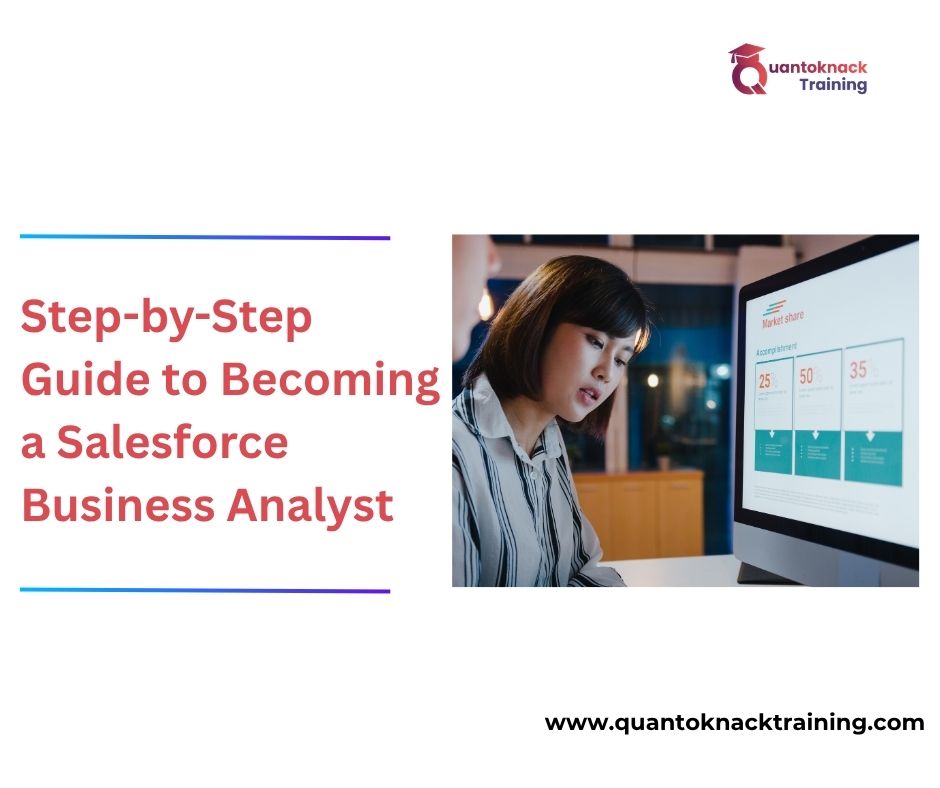
How Salesforce Business Analysts Use Data Cloud for Better Customer Insights

Customer interaction is a kind of story. The customer could see your website, look around at the goods you offer, think for some time and then walk away without making a purchase.

One single interaction is not very expressive. But when the data from different points is combined, it gives the customer a new insight. This is where the difficulty comes in, since customer data will usually not be in your possession. Salesforce Data Cloud has the role of collecting all the customer data scattered on different systems and presenting you with a single customer record in real time, further allowing Salesforce business analysts to find out and suggest actions, make decisions that are informed, and finally create excellent customer experiences.

Let’s have a look at the entire process in detail.

Importance of Data Cloud in Modern Business Environment

Consumers want companies to be aware of their identity, their needs, and how they enjoy being reached. Whether someone uses the web to buy something, contacts customer service, or replies to a promotional email, they anticipate that every point of interaction will give the same experience.

Data Cloud by Salesforce allows businesses to keep their customers’ data coming in and going out of different sources, from your CRM, websites, mobile apps, marketing platforms, and other third-party data sources. And it offers more solid and reliable grounds for AI-driven suggestions, tailor-made customer experiences, and better demand predictions.

How Salesforce Business Analysts Turn Data into Decisions

Software by itself is not what enhances customer service experiences. There will be someone who needs to know the data, spot business opportunities, and suggest doable solutions. This role is frequently played by the Salesforce Business Analyst.

Business analysts have an ongoing relationship with the sales, marketing, customer service, and leadership departments, etc., of a company. Instead, they can spend time answering the very questions that affect the business outcomes.

Imagine an internet-based clothing store that observes decreased repurchase while there is still a steady increase in website traffic. By using Data Cloud, a business analyst could gather insights by combining a customer’s history of purchases, website surfing patterns, interactions with the customer support team, and the customer’s responses to marketing communications. These revelations can be used in directing the company’s advertising efforts, redesigning the customer flow, or developing different loyalty programs in general for the customers.

Five Ways Data Cloud Delivers Better Customer Insights

Below are the top 5 reasons that the data cloud helps you to understand your customers better:

1. Creates a 360-Degree Customer View: Unifying all your customer data in one profile helps you get a single view (360-degree view). The customer data from different sources (CRM, web, social platforms, etc.) has been brought down to the single customer profile in one place by way of data cloud. 

      Business analysts were previously burdened with different sources of data, but now all information about a customer’s journey, like purchase data, service contacts, website behavior, and engagement metrics are consolidated in one place. This gives a complete picture of your customer.

      2. Enables Smarter Customer Segmentation: The data cloud helps you to create a segmentation of customers in a smarter and more dynamic way. Data cloud allows the analyst to make changes in segmentation per customer behavior. A few examples are: The customer who left the purchase cart can get an automated, customized follow-up. Whereas loyal buyers can be offered special rewards only to be available for them. So there is engagement as well as conversion rate uplift.

        3. Provides Real-Time Business Insights: Dashboards that update automatically and keep reflecting the latest data help decision-makers in the business know when they are reaching out to more engaged customers, their sales numbers have changed, marketing campaigns are running, etc., and how service performance is going at the same time with just the press of a button. 

          By having access to updated information only, they can take quicker and more accurate decisions, which lead them to customers with the highest value, and to meet changing customer expectations with changing customer preferences.

          4. Helps Sales Teams Prioritize Opportunities: With the aid of a consolidated customer view that is made available through data clouds, analysts identify leads with the highest probability of conversion, customers who could be persuaded to purchase a higher value product, and those who are inclined to stop their usage. 

            This way, the sales team can allocate its time and effort to opportunities that tend to yield higher returns than those that rely on assumptions.

            5. Supports Predictive Decision-Making: Predictive capability can be added to your Data Cloud by integrating AI features. Customer insights will be anticipated, and customers will have to be engaged, before they will want such an action from the business. Analysts can foresee purchase trends, guess customer needs and suggest such actions that will lead to customers sticking with the business, sales increases and good customer relationships over time.

              Why These Skills Are Becoming Increasingly Valuable

              When companies are still digitizing their processes, business analysts’ duties are not just changing, but they are becoming much more demanding. One thing has Sure changed – the ability of analysts to connect business goals with customer data and create a measurable impact has become very precious.

              To stay relevant in the market of customer intelligence with Data cloud, it’s essential and also adds value to a person’s career. Salesforce business analyst course will expose trainees to business process analysis, collecting requirements, handling stakeholders, Salesforce CRM, reporting, and Data Cloud. It will also teach you to find solutions to real business problems based on customer data. Projects and case studies are a great way to get learners to not only acquire knowledge but also the know-how of the job. They allow learners to have a glimpse of what it really takes to succeed in a workplace setting.

              Preparation for the Future of Customer Intelligence

              Salesforce is a data lake of customer data that enables a unified view from which companies can decide more quickly based on facts and understand their customers more deeply.

              To get ahead within the Salesforce organization, mastering Customer Data, Analytics, and Business Processes is the way to go. Taking a Salesforce business analyst course with QuantoKnack does not only deepens your understanding of these aspects but also equips you for making decision processes more efficient with the help of data.

              READ MORE
              TECHadmin1 Comment
              Share article:TwitterFacebookLinkedin
              439 Views
              22 Likes

              Step-by-Step Guide to Becoming a Salesforce Business Analyst

              The Salesforce ecosystem is booming, and companies are looking for people to create connections between business needs and technology solutions. This is the reason Salesforce Business Analyst is one of the highest-demand career opportunities in today’s IT industry. 

              If you’re planning to transition into Salesforce but would like to be able to do more than program, then a Salesforce Business Analyst Course may be the right road for you. Let’s see how you can start your career in this rewarding domain!

              What Does a Salesforce Business Analyst Do?

              The role of a Salesforce Business Analyst is to serve as the facilitator between the technical and business sides of the organization. The main responsibility of the Salesforce Business Analyst is to help ensure that the Salesforce solutions that have been developed actually provide value to the end user or customer. 

              As an example of how a Business Analyst would help an organization improve its lead management process: If an organization needs to improve their lead management process, the Business Analyst would analyze their existing lead management processes and make recommendations to improve those processes. A Business Analyst would present a recommendation to use Salesforce to address business issues by providing the organization with the tools necessary to automate tasks, develop reports, build dashboards, and create workflows.

              Step 1: Understand Business Analysis Fundamentals

              This is where many learners make mistakes. A Business Analyst cannot be successful by solely relying on knowledge of Salesforce. Further, an understanding of the methods by which businesses operate is necessary in order to be a successful Business Analyst.

              A successful Business Analyst should understand:

              1. How teams communicate with one another
              2. How workflows are arranged
              3. To identify areas of inefficiency
              4. To enhance the current processes

              Thus, a structured training approach will be beneficial: A Professional Salesforce Business Analyst Course, will help you learn about requirement gathering, methods of documentation, stakeholder management, Agile methodology, and the application of these methodologies to real-world scenarios.

              Step 2: Build Strong Communication Skills

              Communication is one of the most important aspects of a Business Analyst’s role. You communicate with many different people or groups frequently, such as clients, developers, QA testers, business stakeholders and more.

              Asking the right questions and articulating technical concepts in everyday language is critical. If a stakeholder tells you “the system is not functioning as expected, you will want to take that statement apart to determine the actual issue. Is the issue slow reporting? Is it due to poor automation? Is there a data duplicate? Is there a lack of visibility?  Communication will help to clarify the actual issue.

              Step 3: Learn Documentation and Process Mapping

              Documentation takes up a large portion of a Business Analyst’s responsibilities. 

              Typical documentation created by a Business Analyst may include: 

              1. BRD (Business Requirement Document) 
              2. FRD (Functional Requirement Document)
              3. User Stories
              4. Process Flows 
              5. Use Case Diagrams

              Knowing how to create these documents will assist technical teams in understanding what needs to be created or completed. Currently, many training programs, such as Quantoknack Training, focus on practical areas where analysts are expected to take responsibility for project documentation immediately after training.

              Step 4: Gain Hands-On Experience

              Although learning theory provides value to this field, it is the application of the theories that will create our confidence levels. Even personal practice-type projects will greatly add strength to your resume.

              Consider performing an analysis of an actual business process you can observe; for example, lead management processes, new hire onboarding processes or customer service-related tracking. Then, explore how Salesforce would positively affect the process.

              Step 5: Learn Agile and Project Methodologies

              The majority of today’s Salesforce implementations are performed using the Agile methodology. As a Business Analyst, you should have an understanding of the following Agile principles:

              1. Scrum meetings
              2. Sprint Facilitation
              3. Product user stories
              4. Product Backlog
              5. User Acceptance Testing (UAT)

              You do not need to be a Certified Scrum Master; however, possessing an understanding of how an Agile team works will be a significant advantage during your interviewing process and as you engage in ‘real’ projects.

              Step 6: Earn Salesforce Certifications

              Certifications will give you validation of your skills as well as credibility in the industry. The Business Analyst Certification has been perceived by many professionals as being very applicable to today’s working environment due to its emphasis on understanding the process and collaboration with stakeholders, which does not have a high technical difficulty level.

              Step 7: Build a Strong Portfolio

              A resume alone is not typically sufficient to put you ahead of other candidates. Build a portfolio that demonstrates your skills, past work experience and your proficiency with associated tools.

              When creating your resume, you will want to focus on your ability to solve problems, knowledge of Salesforce, communication skills, understanding of projects and more.

              Your portfolio will show how you think and solve problems. Even if you are just getting started, by demonstrating an understanding of the practical work you have done, you will likely differentiate yourself from other candidates.

              Step 9: Start Applying for Entry-Level Roles

              After obtaining your foundational skillset, building your resume and maybe gaining experience through real-time projects while learning, it is time to begin applying for positions like:

              1. Junior Business Analyst
              2. Salesforce Functional Analyst
              3. CRM Analyst
              4. Associate Business Consultant

              When recruiting, most employers look for people with practical thought rather than those who merely remember concepts.

              Final Thoughts

              To sum the above up, becoming a Salesforce Business Analyst is not about learning everything at once. You will learn business knowledge and Salesforce knowledge gradually.

              If you enjoy working with people, producing solutions, and improving processes rather than simply producing code, then this is a great job for you. If you complete the suitable Salesforce Business Analyst Course, you can have a stable and long-term career in the Salesforce world. 

              READ MORE
              Recent Posts
              • Salesforce Business Analysts and Agentforce Skills for the AI-Driven CRM Era
                Do you know that a CRM can do much more than just act like a...
              • The Future of Salesforce Careers: Skills Needed for Agentic AI and Agentforce
                Salesforce career landscape is changing faster than ever. AI is...
              • Advanced Validation Rules in Salesforce: Tips for Admins in 2026
                If you are thinking a worthy Salesforce data happens by an...
              • Salesforce Agentic AI and Agentforce: The Future of Intelligent CRM
                What if your CRM could do more than just store customer records...
              • Salesforce Headless Commerce: Transforming Digital Shopping Experiences 
                The way customers shop online has drastically changed. Shoppers...
              logotype

              We cater to individuals and corporates and provide IT training and certification programs.

              44679 Endicott Drive Suit 300 #1046 Ashburn, VA 20147 United States

              Phone: +1-571 989 9489

              Email: atul.deo@quantoknack.com

              Useful links

              About Us

              Contact Us

              Blog

              Courses

              • Live Salesforce Admin Training
              • Business Analyst
              • QA Testing Course
              • Advance JAVA Training
              • SQL Server Training
              • Live Salesforce Developer Training Certification Course
              • Digital Marketing
              • Oracle DBA Training

              Subscribe

                Facebook
                Instagram Pinterest Linkedin
                Logo star

                 2026 Quantoknack. All Rights Reserved